In this article
The holiday season fills Miami homes with new products: appliances, toys, chargers, scooters, space heaters. Most work as promised. When one does not, and someone is hurt, the first instinct is often to get rid of it. Throw it out. Send it back. Let the store handle it. That is a common mistake, and it is easy to avoid.
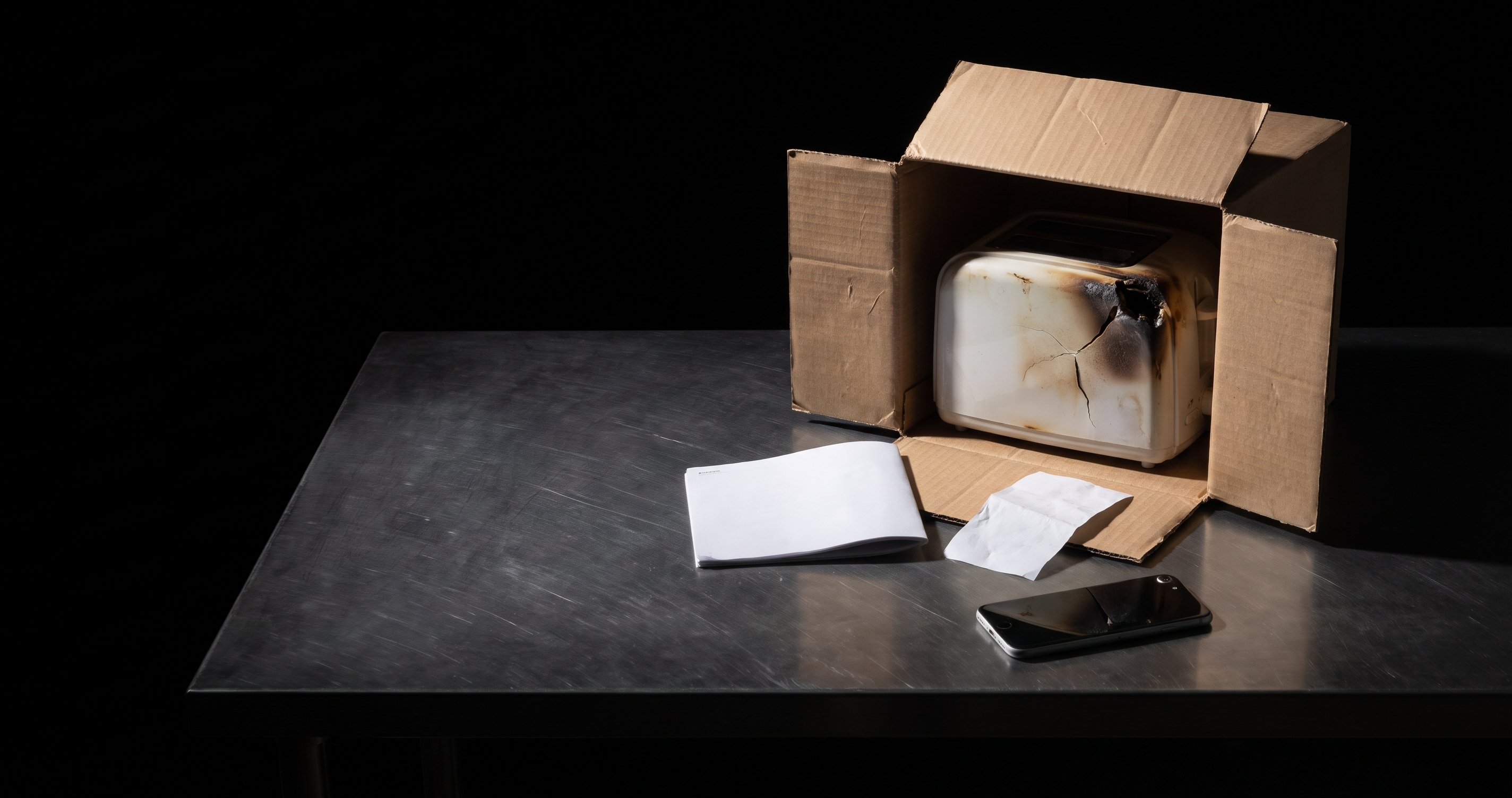
If a product injured you or someone in your family, keep the product and keep the box.
Why the product itself matters
In a product case, the question is usually what was wrong with the product. A photo helps. The product itself helps far more, because it can be examined, tested and compared against how it was supposed to work. Once it is gone, nobody can examine it, and you are left explaining what happened from memory.
Florida law defines these claims broadly. Section 768.81(1)(d) of the Florida Statutes describes a products liability action as a civil action based on strict liability, negligence, breach of warranty, nuisance, or similar theories "for damages caused by the manufacture, construction, design, formulation, installation, preparation, or assembly of a product." Proving that kind of claim often depends on the physical object.
What to keep
- The product. Keep all of it, including any burned, broken or melted pieces and the cord or charger it was using.
- The packaging. The box, inserts and shipping labels can show where and when it was bought and what was sold with it.
- The manual and warnings. Keep the instructions, any warning labels and any papers that came inside.
- The receipt or order record. A paper receipt, an email confirmation, an app order screen or a card statement line can all help show who sold it and when.
- Photos and video. Photograph the product, the place where the injury happened and your injuries, before anything is moved or cleaned.
- Medical records. Keep every discharge paper, bill and follow-up instruction. Tell your doctor how you were hurt.
- Where you saw it. Save the product page, the advertisement or any messages with the seller, and the names of anyone who saw what happened.
Questions about your situation? Talk to Dennis.
What not to do
- Do not repair it. A repair can change the very thing that needs to be examined.
- Do not return it or exchange it. A refund is not worth losing the evidence.
- Do not hand it to the seller, the maker or an insurance company. Once it leaves your hands, you may not get it back.
- Do not keep using it. Safety comes first. Stop using the product and store it somewhere safe, away from children and away from heat.
- Do not post about it before you get advice. Photos are fine to take. What you say publicly can be used later.
If a fire or another danger is involved, call 911 first and get safe. Evidence comes second.
The clock is running
Florida sets deadlines for these claims. Section 95.11(3)(d) places actions "for injury to a person founded on the design, manufacture, distribution, or sale of personal property" in the group of actions with a four-year period, while section 95.11(5)(a) places actions founded on negligence in the two-year group. Section 95.031(2)(b) says an action for products liability under section 95.11(3) must be begun within the period prescribed in that chapter, "with the period running from the date that the facts giving rise to the cause of action were discovered, or should have been discovered with the exercise of due diligence," rather than from other dates prescribed in section 95.11(3), except as that subsection provides. The same subsection also contains a separate outer limit, called a statute of repose, that for most products is 12 years after delivery of the product to its first purchaser or lessee who was not engaged in the business of selling or leasing it or of using it as a component in making another product. It has different rules for certain products, such as those with a longer warranted useful life, and it has exceptions of its own.
Which deadline applies to a particular situation depends on the facts. That is a question for a lawyer who has your records in front of them. The safe course is to ask early.
Fault can be shared
Florida's comparative fault statute, section 768.81, covers products liability actions, which it treats as a kind of "negligence action." It says: "In a negligence action, the court shall enter judgment against each party liable on the basis of such party’s percentage of fault and not on the basis of the doctrine of joint and several liability." The statute also says that "any party found to be greater than 50 percent at fault for his or her own harm may not recover any damages." A company sued over a product may point to how it was used. The product, the manual and the packaging are how that gets tested.
Talk to a lawyer before you hand anything over
A short call can tell you how to store the product, who should examine it, and what to say if an insurer or the seller asks for it. Dennis Gonzalez is a former Miami-Dade prosecutor who represents people injured by dangerous products and in other accidents. Read more about products liability claims in Miami.
Related reading: holiday gift and decoration hazards.
Call (305) 209-0384, answered 24/7. We speak English and Spanish. This article is general information, not legal advice about your situation.