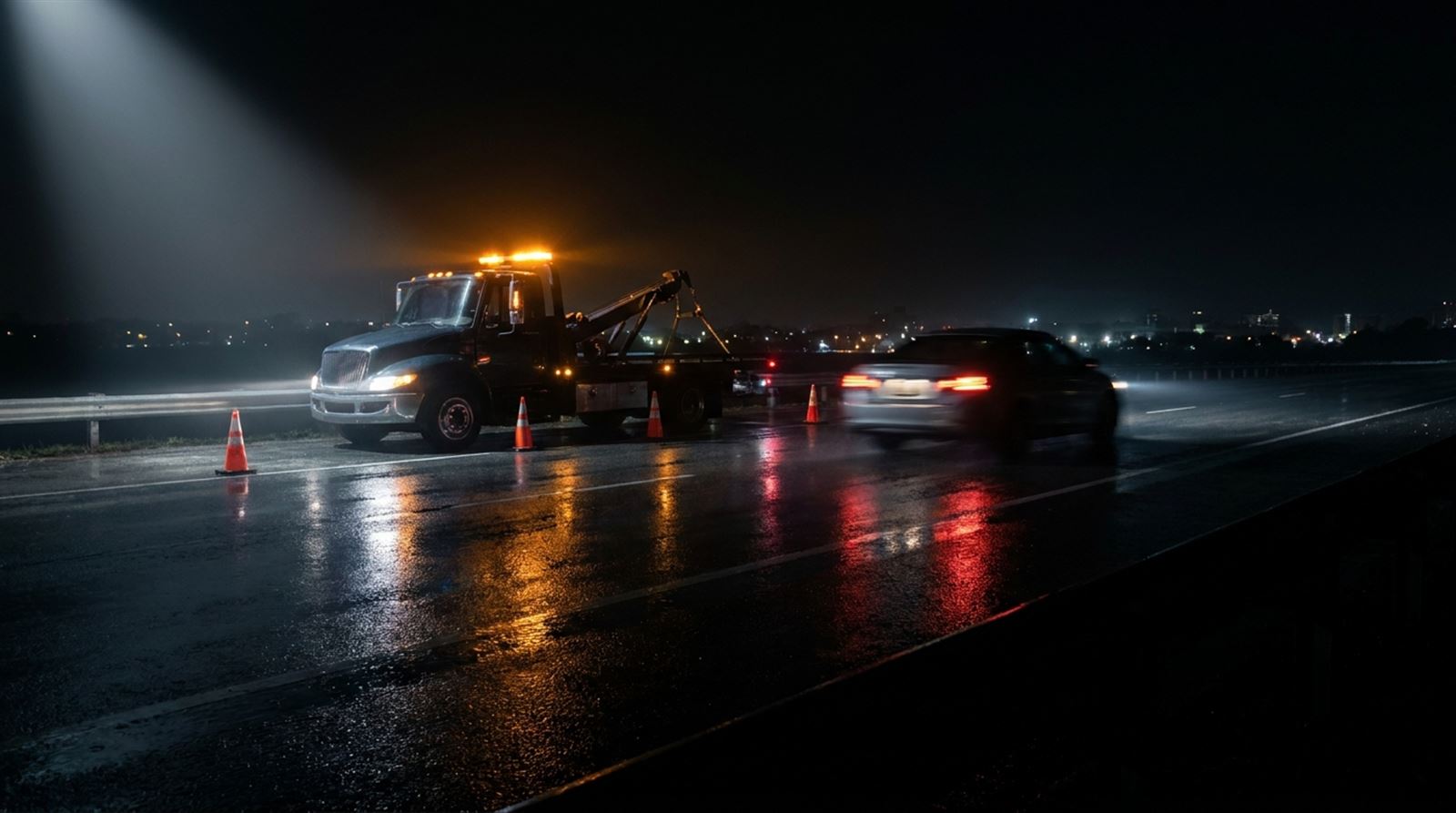
Another Road Ranger Killed: What Florida's Move Over Law Requires of Every Driver
Florida's highway helpers work a few feet from traffic moving at 70 miles per hour. This week, WTSP reported that after another Road Ranger was killed, a mother in Brandon is pushing for tougher Florida laws. A separate report from WPEC described a Road Ranger struck at a crash scene on I-95 near Lantana Road. Those cases are being investigated, and we will not speculate about them. But every Miami driver should know what the Move Over law says before the next time they see flashing lights.
What the law says
Section 316.126, Florida Statutes, applies when certain vehicles are stopped or working on the roadside. As we read the statute, the list includes emergency vehicles with visual signals, sanitation and utility service vehicles performing a task, wreckers with amber lights, road and bridge maintenance vehicles, and disabled vehicles showing hazard lights, flares, or warning signs.
When it applies, drivers must act "as soon as it is safe." On an interstate or other highway with two or more lanes in the same direction, the driver "shall vacate the lane closest to the emergency vehicle." If a lane change is not safe, the driver must "slow to a speed that is 20 miles per hour less than the posted speed limit" when the limit is 25 mph or greater. On a two-lane road where the limit is 20 mph or less, the driver must slow to 5 mph.
A law enforcement officer's directions override these rules.
What happens if a driver does not move over
A violation of the section is a noncriminal traffic infraction, punished as a moving violation under chapter 318. A traffic ticket is not the whole story, though. If a driver's failure to move over hurts someone, other charges or a civil lawsuit can follow.
The civil side: if you or someone you love is hurt on the roadside
Roadside injuries can happen to tow operators, utility workers, stranded motorists, first responders, and passengers. A few practical points:
- Get medical care first. Injuries from highway-speed impacts can be serious and delayed.
- Document the scene. Photos, dashcam video, and witness names help. Ask whether nearby businesses or traffic cameras may have footage, and ask quickly, because it is often overwritten.
- Do not give a recorded statement to an insurer before you understand your rights.
- Know the deadline. Florida sets time limits for injury claims, and they are shorter than many people think. Talk to a lawyer soon.
- Workers' comp may overlap. If you were hurt on the job, a workers' compensation claim and a claim against the at-fault driver can both exist.
If you are the driver
Maybe you did not see the vehicle, or you were boxed in and could not change lanes. Those facts matter. If you have been cited, or a crash happened, do not discuss fault with anyone but your own lawyer. We defend traffic and criminal charges and handle injury claims, so we look at both sides of the roadside.
This article is general information, not legal advice. Every case turns on its own facts.
Hurt on a Florida roadway, or facing a ticket or charge after a crash? Call Dennis Gonzalez Law, P.A. at (305) 209-0384, answered 24/7. See our personal injury practice for more.