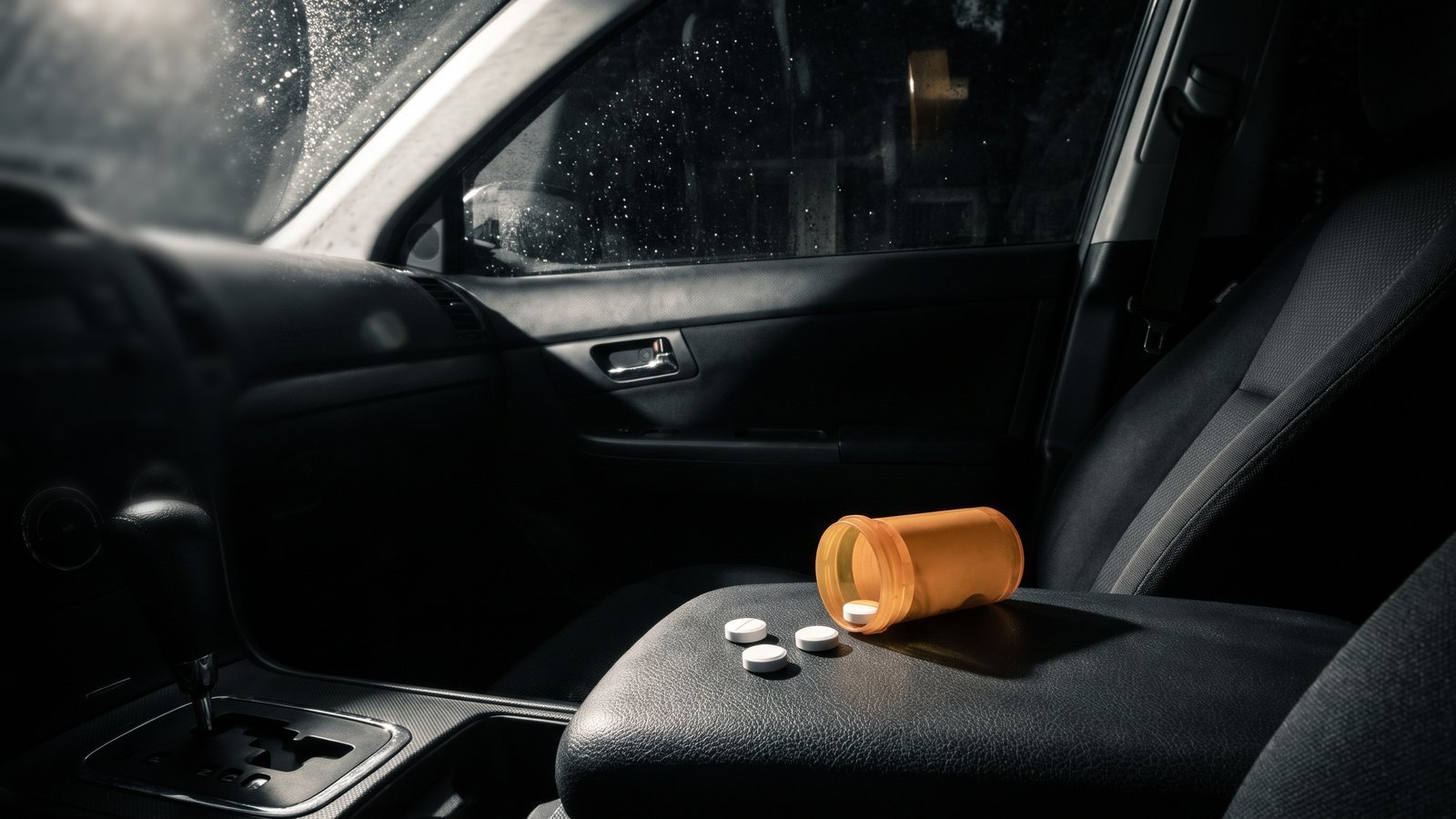
In Florida, having most controlled substances without a valid prescription is a third-degree felony, and the law sets no minimum amount, so even a single pill can be charged. The State has to prove that you knew the substance was there and that you intentionally exercised control over it. Being near it is not enough on its own. This post explains how the charge works, why it is showing up more often in Miami-Dade, and what to do if you were booked.
A charge on the rise
Possession of a controlled substance was the most-booked felony charge code in our Miami-Dade jail data over the last 12 months. From November 2025 through October 2026, it appeared on 1,896 bookings, up from 1,304 in the 12 months before, an increase of about 45%. Cocaine possession, counted separately, came next.
Those counts leave out warrants, probation violations, agency holds, public-drinking charges and bookings that list no fixed address. A booking is an arrest, not a conviction, and the charge is the one the jail recorded, not necessarily the one the State Attorney files. Everyone is presumed innocent. You can follow the monthly numbers on our Miami-Dade arrest trends page.
What the statute covers
Florida law makes it a crime to possess a controlled substance unless it was lawfully obtained from a practitioner or under a valid prescription, or the possession is otherwise authorized by the drug laws. "Controlled substances" include many prescription medications, such as certain painkillers, anxiety medications and stimulants, as well as street drugs.
A case like this can start with something ordinary: a few pills in a pocket, loose tablets in a car, or a bottle with someone else's name on it. That name on the bottle does not, by itself, show that you lawfully obtained the pills from a practitioner or under a valid prescription. Where they came from is a question for your lawyer.
Some amounts and drugs are treated differently. Possession of 20 grams or less of cannabis is a first-degree misdemeanor. Possession of a Schedule V substance is a second-degree misdemeanor. At the other end, possessing more than 10 grams of certain listed drugs is a first-degree felony.
Questions about your situation? Talk to Dennis.
What the State has to prove
Under Florida's standard jury instruction, the State must prove beyond a reasonable doubt that:
- You possessed a substance, meaning you knew it existed and intentionally exercised control over it.
- The substance was a specific controlled substance, usually shown by a lab test.
Possession can be "actual" (in your hand or pocket) or "constructive" (somewhere you had the power to control it, such as a car console or a bedroom). Possession can also be joint, shared by two or more people. The instruction says that mere proximity to a substance does not prove control without additional evidence.
That matters in shared spaces. If pills were found in a car with four people in it, the State has to connect them to you with more than where you were sitting.
"I didn't know what it was"
Florida law says that knowing the illegal nature of the substance is not an element the State must prove. Instead, lack of knowledge of its illicit nature is an affirmative defense. If you raise it, the jury may, but does not have to, infer that you knew from the fact of possession.
This is technical, and whether to raise it is a decision for you and your lawyer, not something to explain to an officer on the roadside.
What you are facing
A third-degree felony carries up to five years in prison and a fine of up to $5,000. Those are maximums, not predictions. Your record, the facts and the judge all matter, and no lawyer can promise a result.
There can be other paths. Florida law sets up pretrial substance-abuse education and treatment programs, including drug court, that some people charged with nonviolent felonies may enter. When the court finds that a person successfully completed the program, it must dismiss the charges. Eligibility depends on the charge, your record and the court, so ask a lawyer whether it fits your case.
The overdose exception
If you seek medical help in good faith for someone who is overdosing, or you are the one overdosing, Florida law says you may not be arrested, charged or prosecuted for simple possession when the evidence was found because of the call for help. The protection does not cover every drug charge, such as possessing more than 10 grams of certain drugs. Call 911. A life matters more than a charge.
What to do after an arrest
- Do not explain the pills. Where they came from and whose they are is a conversation for your lawyer.
- Do not consent to searches. Say it once, clearly and calmly.
- Write down the details. Where you were, who was there, where the pills were found, and whether anyone asked for permission to search.
- Keep your real prescriptions. If you have a valid prescription, keep the bottle, pharmacy receipt or records and give them to your lawyer.
A person booked in Miami-Dade who is not released first must be brought before a judge for first appearance within 24 hours of arrest. Read our guide to first appearance in Miami-Dade.
How the search happened is often the heart of these cases. See our page on motions to suppress, and our detailed pages on possession of a controlled substance and prescription pill charges.
If you are not a U.S. citizen, talk to a lawyer before you enter any plea. Drug charges can carry immigration consequences that reach far beyond the sentence.
Frequently asked questions
Is one pill without a prescription really a felony? It can be. The statute sets no minimum amount for most controlled substances. The exceptions include 20 grams or less of cannabis and Schedule V substances, which are misdemeanors.
The pills were in a shared car. Can they charge me? They can charge you, but the State still has to prove that you knew the pills were there and intentionally exercised control over them. Being near them is not enough by itself.
Can the charge be dismissed? Sometimes. A lawyer will look at the search, the lab results, the proof of possession, and whether a pretrial program is available. No one can promise a dismissal.
Talk to a lawyer before you explain anything
If you or someone you love was arrested for possession, call for a free consultation. We are available 24/7 at (305) 209-0384.
General information, not legal advice. Every case is different. Prior results do not guarantee a similar outcome.