Violent crimes
Battery on a Law Enforcement Officer in Miami
An arrest gets physical. An arm comes up. Someone is pulled to the ground. In the report, that moment can become battery on a law enforcement officer, a third-degree felony, often filed together with resisting.
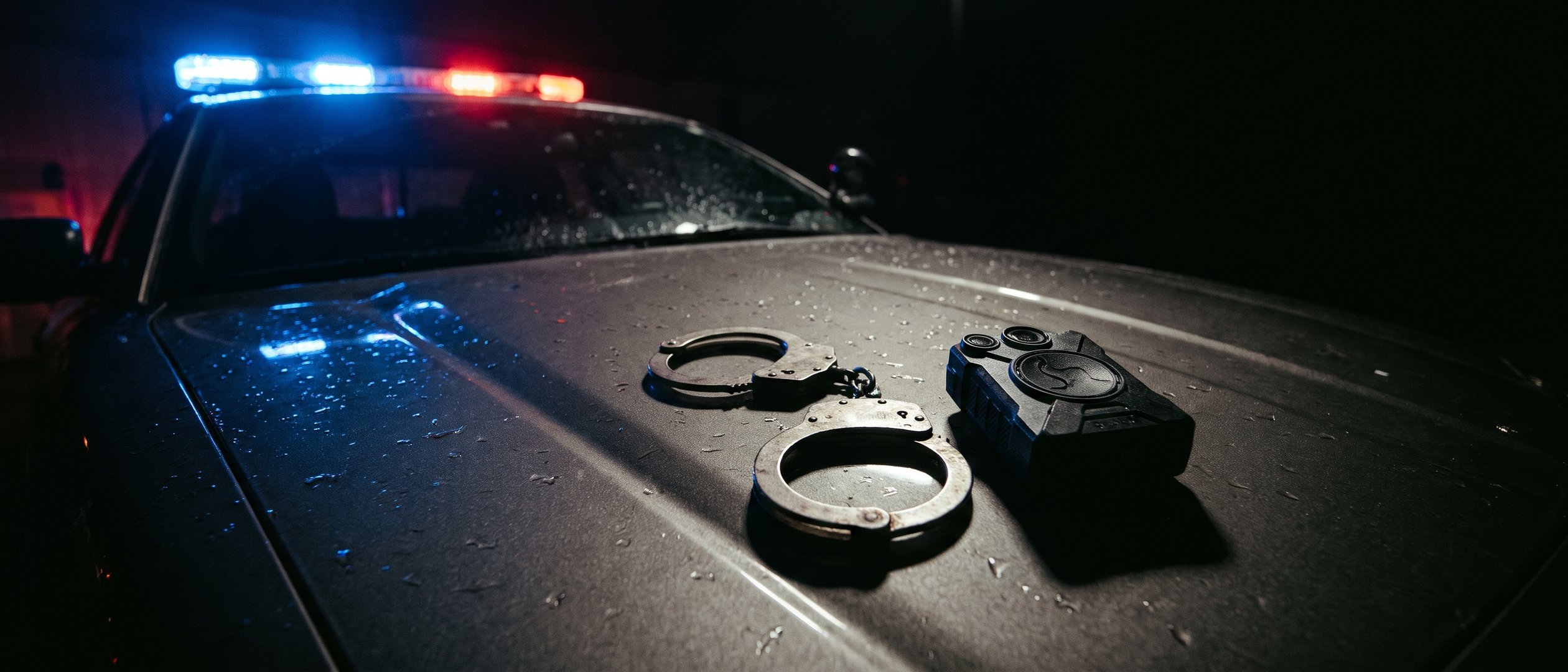
These cases depend on the seconds of the arrest itself. What the body cam shows, and what it doesn't, matters more than anything in the report.
Dennis Gonzalez Jr. is a former Miami-Dade prosecutor who has been defending people since 2012. Our office answers 24 hours a day.
For an overview, see Assault and Battery Defense.
What Is Battery on a Law Enforcement Officer?
Florida raises a battery by one level when a person is charged with knowingly committing a battery on a law enforcement officer or another protected worker while that person is engaged in the performance of his or her official duties.
A simple battery, normally a first-degree misdemeanor, becomes a third-degree felony.
Who counts as a "law enforcement officer" includes police officers and deputies, correctional officers, correctional and county probation officers, part-time and auxiliary officers, federal law enforcement officers as Florida law defines them, and certain state agency officers.
Other protected workers covered by the same rule include firefighters, emergency medical care providers, hospital personnel, traffic accident investigation officers, traffic infraction enforcement officers, parking enforcement specialists, certain licensed and uniformed security officers, public transit employees, utility workers on critical infrastructure, railroad special officers, law enforcement explorers, and others listed in the statute.
What the State Must Prove
In plain words, the State must prove beyond a reasonable doubt that:
- you committed a battery (an intentional touch or strike against the person's will, or intentionally causing bodily harm);
- the person was a law enforcement officer or other protected worker;
- you knew that; and
- the officer was engaged in the performance of his or her official duties at the time.
Penalties
| Charge | Florida degree | Maximum or minimum |
|---|---|---|
| Battery on a law enforcement officer | Third-degree felony | Up to 5 years in prison, $5,000 fine |
| Battery on an officer in furtherance of a riot | Third-degree felony | Minimum 6 months |
| Battery on a protected worker while possessing a firearm or destructive device | Third-degree felony | Minimum 3 years |
| Same, with a semiautomatic firearm and high-capacity magazine, or a machine gun | Third-degree felony | Minimum 8 years |
| Aggravated battery on a law enforcement officer | First-degree felony | Minimum 5 years; up to 30 years |
For the firearm minimums, adjudication cannot be withheld.
New since July 1, 2026. Battery on a law enforcement officer that results in bodily injury is now on Florida's prison releasee reoffender list. If it happens within 3 years after release from prison, the prosecutor may ask for that sentence. If the State proves it, the sentence is 5 years in prison for a third-degree felony, and the person must serve 100% of it.
How Battery on an Officer Cases Are Defended
- Knowledge. The State must prove you knew the person was an officer or protected worker. Plain clothes, darkness, confusion, or a sudden grab from behind can matter.
- Intent. Battery requires an intentional touch or strike. Flinching, falling, tensing up, or pulling an arm back in pain while being handcuffed is not the same as hitting an officer.
- The video. Body cams, dashcams, bystander phones and business cameras. Different angles can tell different stories. We review every frame we can get.
- Official duties. Was the officer engaged in the performance of official duties at the time?
- Over-charging. Officer battery is often added to a resisting charge. Resisting without violence is a first-degree misdemeanor; resisting with violence is a third-degree felony. Which one, if either, fits the facts is often contested. See Resisting Arrest.
- Excessive force. If the officer's use of force caused the struggle, that can matter to how a case is charged and resolved.
Know this about self-defense and officers. Florida law says a person is not justified in using or threatening force to resist an arrest or detention by an officer who was acting in good faith and is known, or reasonably appears, to be an officer, even if the arrest is later found unlawful. Florida's self-defense immunity law also has an exception for force used against a law enforcement officer performing official duties, when the officer identified himself or herself or the person knew or reasonably should have known it was an officer. The fight in these cases is usually about what really happened, not about a right to resist. Fight the arrest in court, not on the street.
What to Do Now
- Say nothing about the arrest. Ask for a lawyer.
- Do not post about it or talk about it on jail phones.
- Write down where it happened, the time, and anyone who saw or filmed it.
- Photograph your injuries as soon as possible.
- Call a lawyer so body-cam and outside video can be requested quickly.
Why Choose Dennis Gonzalez Law, P.A.
- Former Miami-Dade prosecutor.
- Defending people since 2012.
- Super Lawyers recognition and an Avvo Rating of 10.0.
- Bilingual office — se habla español.
- We answer 24 hours a day.
Frequently Asked Questions
Is battery on a police officer a felony in Florida?
Yes. A battery that would be a misdemeanor is raised to a third-degree felony when the State proves the accused knowingly committed it on an officer engaged in official duties.
I didn't know he was a cop. Does that matter?
It can. The officer statute applies to a person charged with knowingly committing the battery on a protected worker.
I pulled my arm away while being cuffed. Is that battery?
Battery requires an intentional touch or strike against the person's will, or intentionally causing harm. Pulling away is often charged as resisting instead. The video usually decides what really happened.
Can I claim self-defense against an officer?
Florida law limits it sharply. A person may not use force to resist an arrest by an officer acting in good faith who is known, or reasonably appears, to be an officer, even if the arrest turns out to be unlawful. Talk to a lawyer about your specific facts.
What is the maximum sentence?
Up to 5 years in prison and a $5,000 fine for battery on an officer, with mandatory minimums in some situations, such as possessing a firearm or a riot.
What changed in 2026?
Since July 1, 2026, battery on a law enforcement officer that results in bodily injury is on Florida's prison releasee reoffender list.
Talk to a Lawyer Now
Every case turns on its facts, and no result is guaranteed. If you or someone you love has been charged with battery on a law enforcement officer in Miami-Dade, call for a free consultation, 24 hours a day, in English or Spanish.
Call (305) 209-0384.
Related
- Assault & Battery DefenseFights, simple and aggravated battery, and self-defense.
- Simple BatteryThe charge, the proof, and the defense.
- Felony BatteryWhen a battery is charged as a felony.
- Aggravated BatteryThe charge, the proof, and the defense.
- Immigration ConsequencesWhat a plea or conviction can do to a green card, visa, or status.
- Motions to SuppressIllegal stop, search, or interrogation? Keep that evidence out of court.
- Bond & Nebbia HearingsGetting out after an arrest: bond court, source-of-funds holds, federal detention.
- Resisting ArrestWith or without violence: the charge and the defense.